

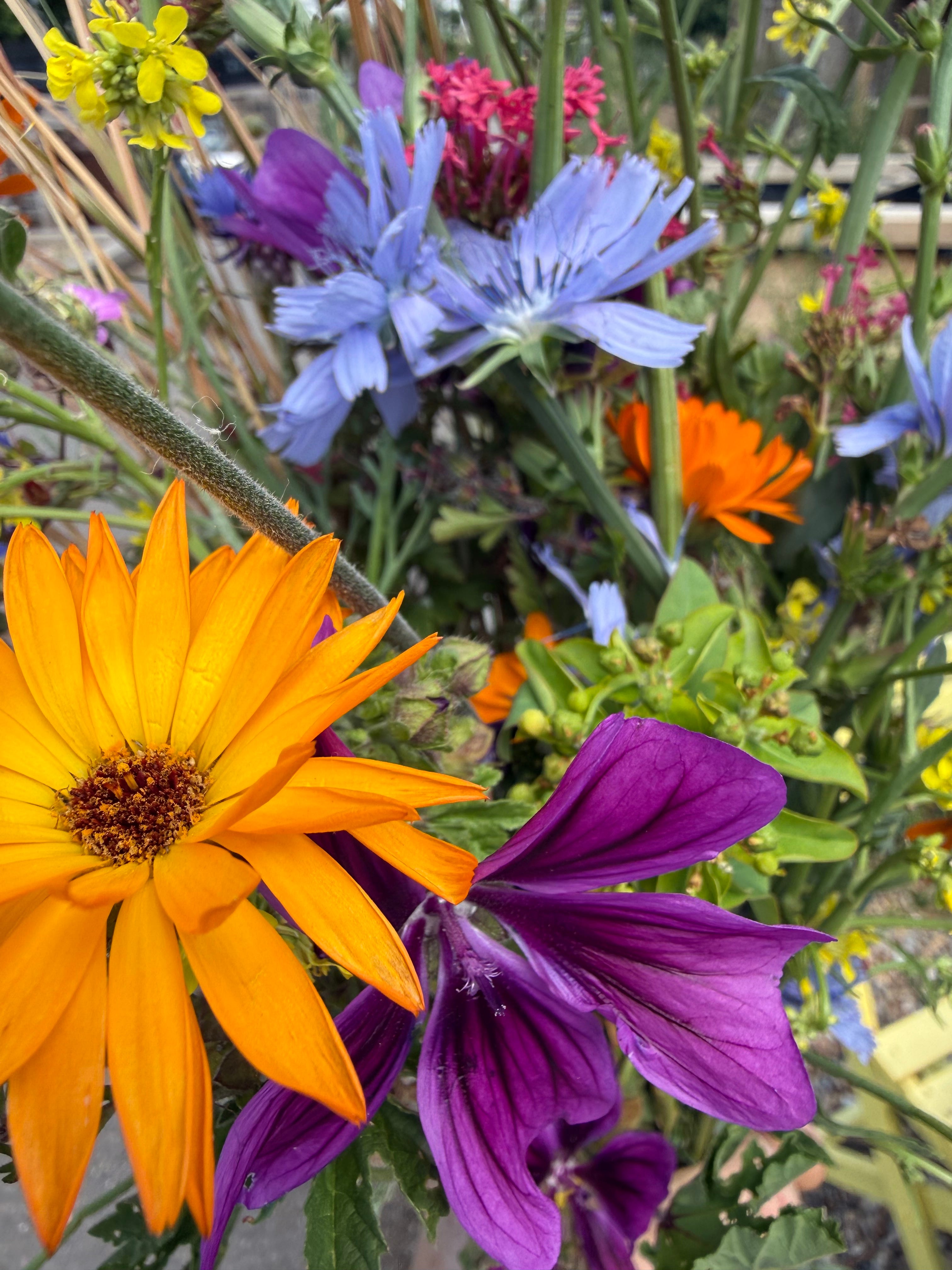

June

Mine is the Month of Roses; yes, and mine
  The Month of Marriages!  All pleasant sights
And scents, the fragrance of the blossoming vine,
  The foliage of the valleys and the heights.
Mine are the longest days, the loveliest nights;
  The mower's scythe makes music to my ear;
I am the mother of all dear delights;
  I am the fairest daughter of the year.

- Henry Wadsworth Longfellow

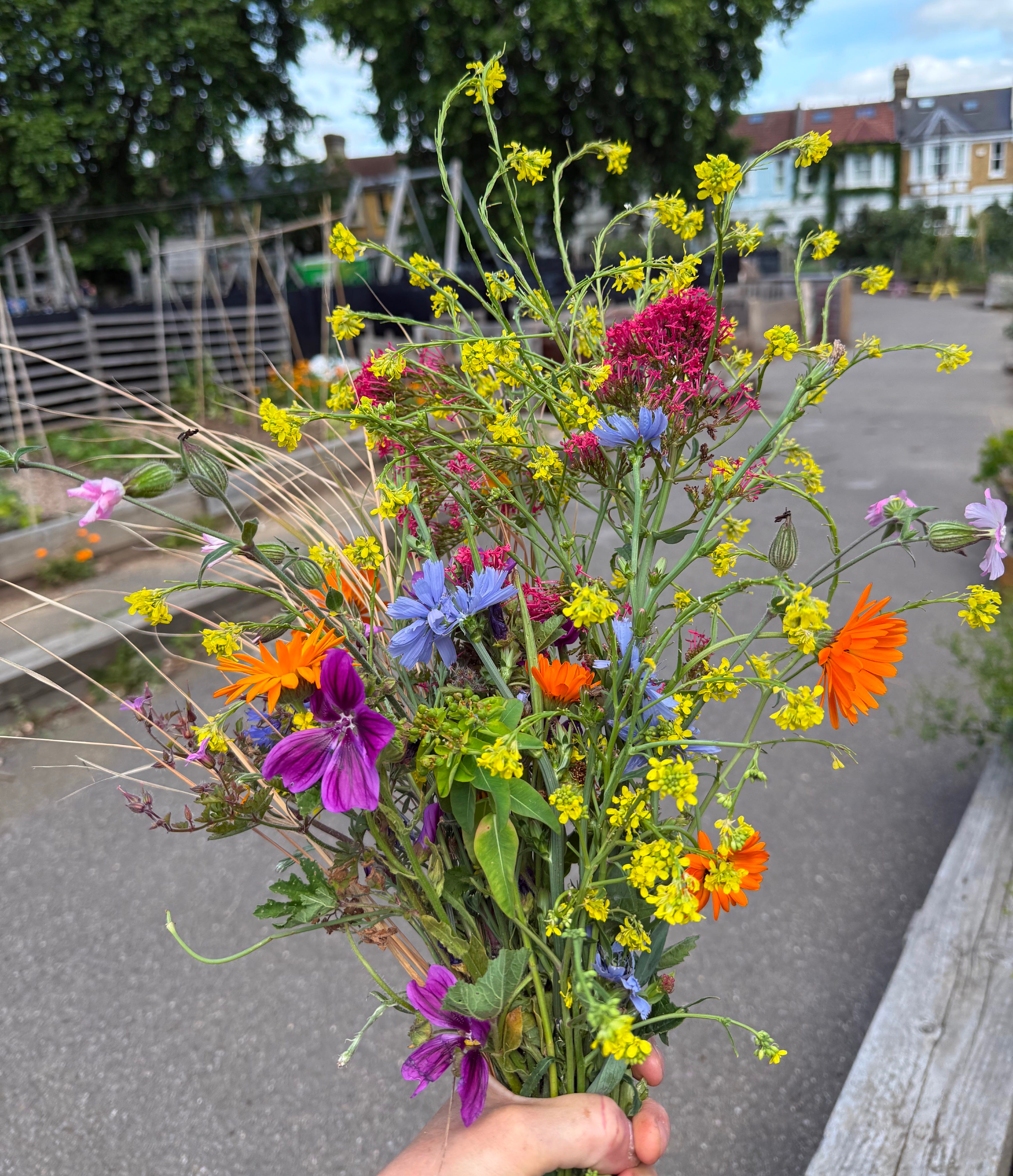
Plants & Posies for Sale
On 13th June we held our second plant sale in aid of the community garden (the first being held in May, as written previously). All our offerings were sold on a “Pay What You Can” basis, with a suggested price for our happy and healthy plants of just £2.
We had on offer lots of tomatoes, peas, beans, cucumbers, cucamelons, pollinator-friendly perennials and annuals, sage, rosemary, chives, chillis and more.


The local community came out to support us again, and helped us to raise another £300. Combined with the proceeds from our earlier sale in May, we made almost £1000 - a phenomenal effort! All funds went straight back into the community garden, helping us to keep sowing and growing, sharing and caring at no cost to any of our volunteers and visitors.
Thank you to all who came out to support us. It takes a lot of effort and time to nurture such a large number of plants for fundraising events, so we’re delighted that so many found a new home. We hope that your plants are thriving!

Loads of Legs
The garden sprouted a huge number of extra legs in June! Fortunately, they didn’t belong to the volunteers, but rather to the many caterpillars and other invertebrates that had decided to set up their starter home at LBG this year.
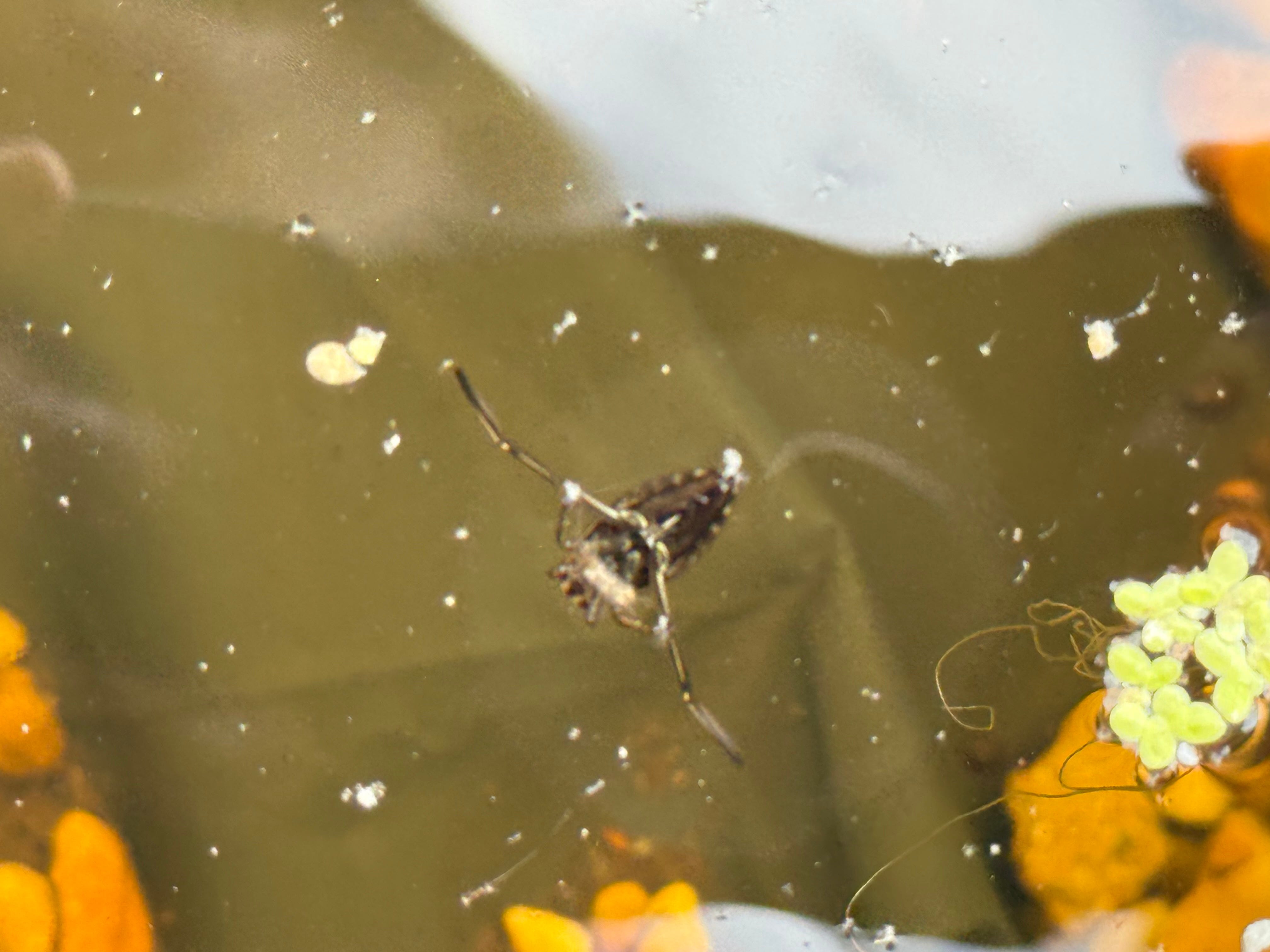
Ladybirds of all designs were spotted across wild and grassy areas, butterfly and moth caterpillars occupied patches in the Food Forest, and earwigs scuttled out of dry leaves if disturbed. The wood lice were having a whale of a time in the compost, and the shield beetles could be seen across leafy middle-canopies. We even had Water Boatmen drifting and skimming across the wildlife pond skilfully.
Some of the caterpillars were not as welcome as others; the caterpillar of the Fig Leaf Skeletoniser Moth, or Fig Leaf Roller Moth, was back again, albeit not as voraciously as in previous years. A light wiping of the leaves with our fingers generally took care of the worst affected areas.
The Plum Fruit Moth also made an appearance this year . This was a slightly creepier surprise to find, as they make their home inside the fruit itself, so they’re typically found when preparing the fruit for eating!
Still, all part of nature, and not much to be done about it. Some losses are to be expected, and the benefits of these creatures in the garden generally far outweighs the cost.


One of the most delightful discoveries we made were the sprawling masses of Peacock butterfly caterpillars on our nettle patch. Nettles are the primary food source for the Peacock butterfly, as is for many other beloved native mini beasts. The much maligned stinging nettle is usually removed as a weed from residential gardens and allotments wherever it is noticed. This wonderful sight is just another sign to suggest you allow a little patch of nettles (and other “weeds”) to grow wherever it is practical or possible to do so.

The Food Forest Takes Shape
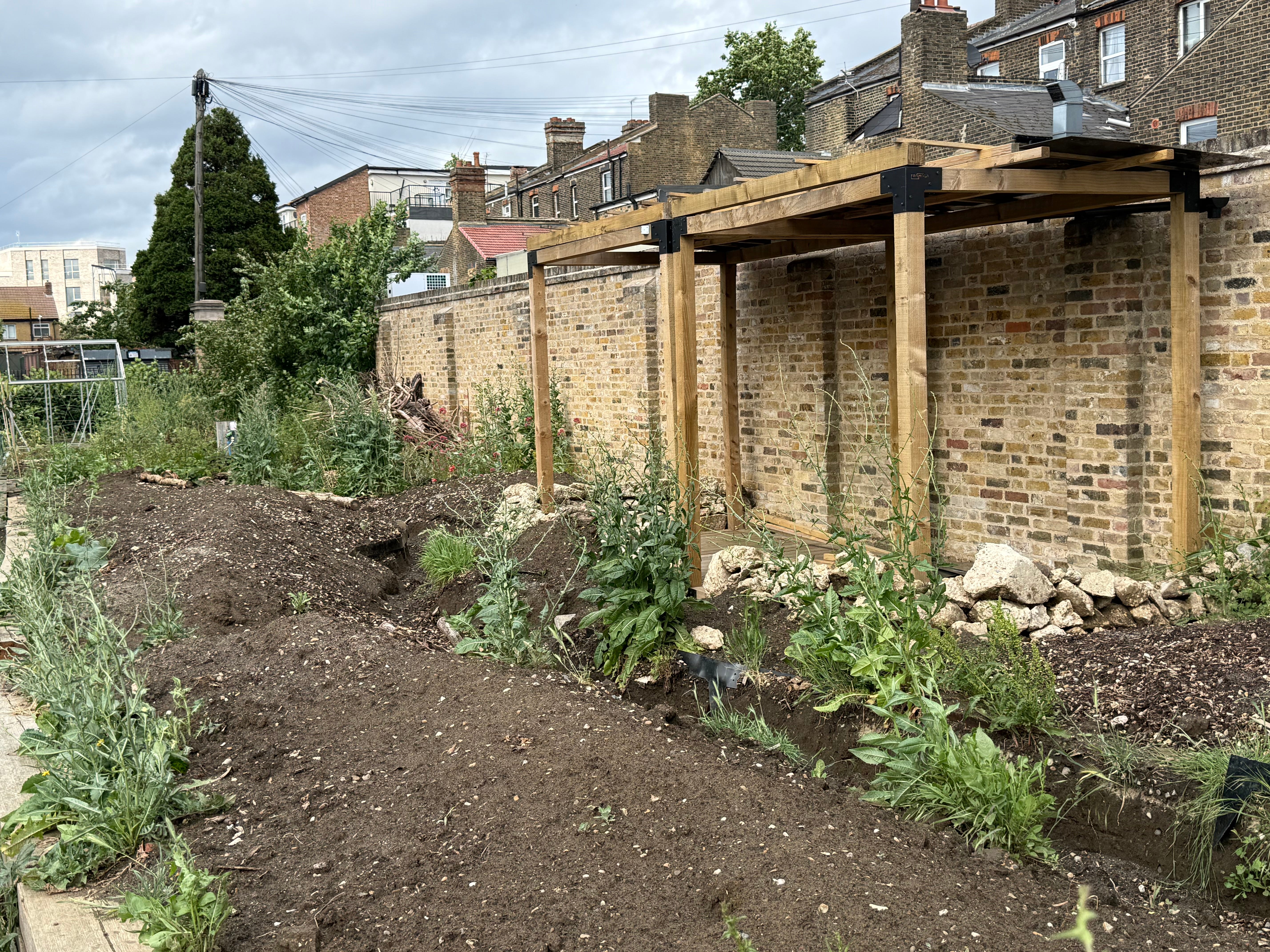
The great Hügelkultur mounds of the newly created Food Forest really took off in June, with mass planting taking over the surface earth. New arrivals included cherry and plum trees, verbenas, rhubarb, courgette, comfrey, valerian, chicory, mustard, hyssop, and a variety of remaining wildflowers.
The wooden structure evolved with a new balustrade and temporary roof. In time, we’ll create a rainwater capture roof and add an additional IBC tank to daisy-chain with the existing two already in position.


What Is Hügelkultur?
A brief explainer follows for those interested.
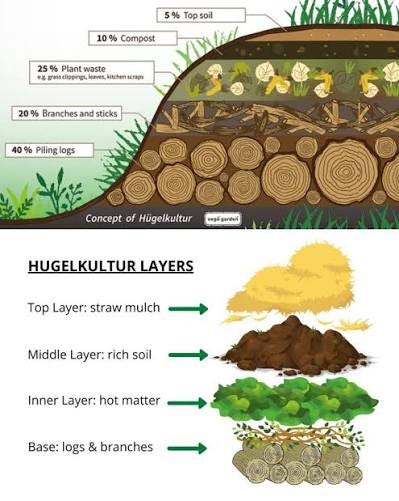
“Hügelkultur (German pronunciation: [ˈhyːɡl̩kʊlˌtuːɐ̯], alternative spelling without umlaut: Huegelkultur), literally mound bed or mound culture, is a horticultural technique where a mound constructed from decaying wood debris and other compostable biomass plant materials is later (or immediately) planted as a raised bed. Considered a permaculture practice, advocates claim that the technique helps to improve soil fertility, water retention, and soil warming, thus benefitting plants grown on or near such mounds.”
- Melissa Miles (3rd August 2010).
"The Art and Science of Making a Hugelkultur Bed – Transforming Woody Debris into a Garden Resource".
The Permaculture Research Institute.

Beat The Heat
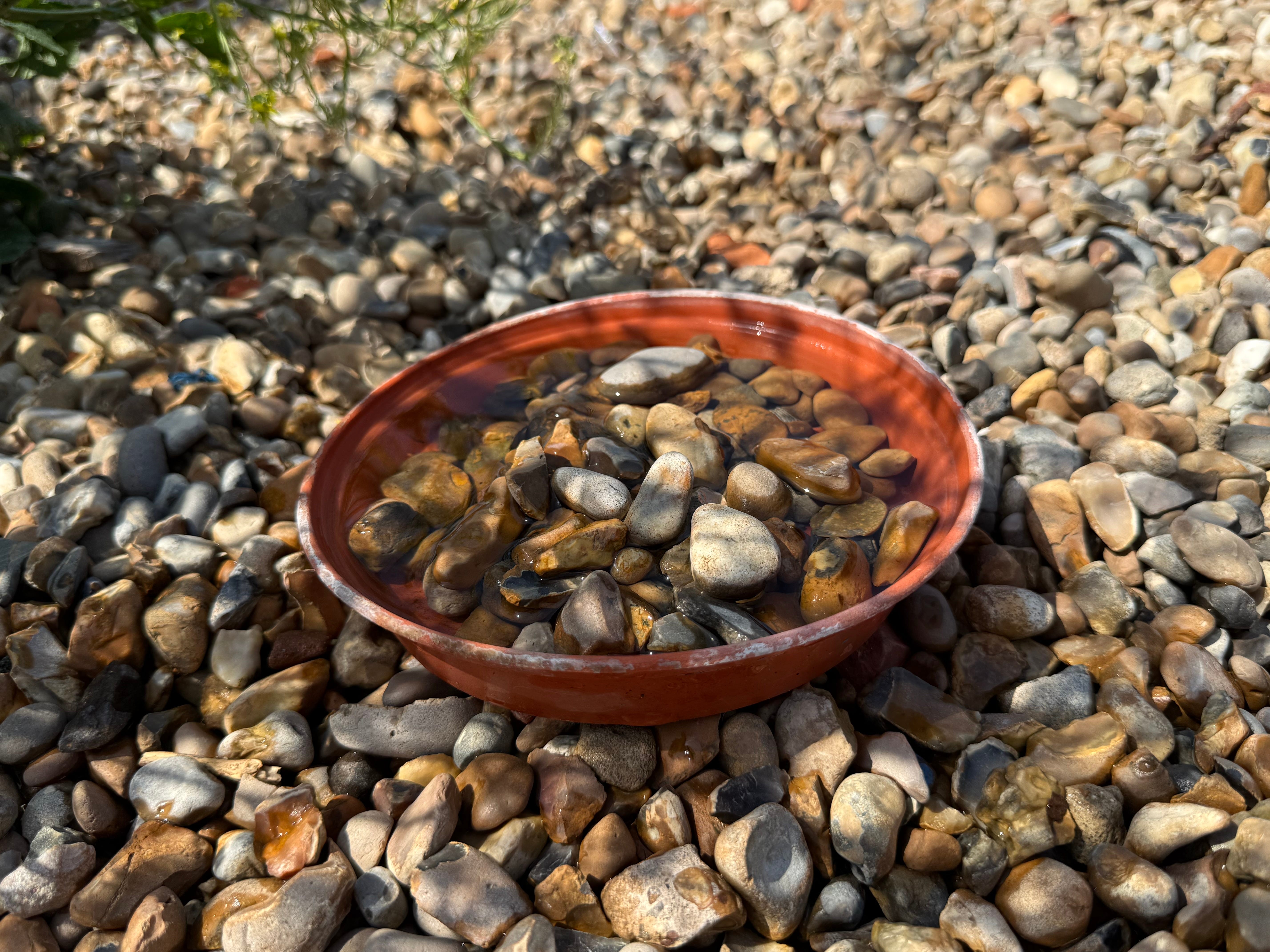
I realise that I’m stating the obvious, but June was HOT. The community garden doesn’t currently have much in the way of shade. And it wasn’t just the plants that needed attention; our wildlife needed watering too. We set up simple bee and butterfly drinking spots around the garden, hoping to offer some hydration to our flitting friends. Just a shallow dish with some gravel to provide safe perching spots.


The wildlife pond shrank dramatically, prompting refills of rainwater from the IBC tanks to keep it from becoming a stagnant bog. There’s perhaps a discussion to be had about whether to intervene if a wildlife pond (without captive fish) depletes due to extreme weather, or leave it as “nature” intended. However, since it’s not a naturally-occurring pond, we felt we needed to do a little bit to care for the living creatures who had come to call it home in recent months.


While other plants and creatures flagged (including us), some of our flowery friends met the challenge head-on. The branching sunflowers got a huge boost, adorning the planted beds with copycat sunshines everywhere. The California poppies clumped and spread, waving in the occasional breeze like miniature fireballs. And the Chicory, pastel blue frills of persistent blooms, gave impressive structure and architectural interest in the Food Forest, offering some dappled shade to ground-level occupants.

Next up: Our July report. Read about our collective midsummer madness; what overcame the heat, what gave up the ghost, and a little sneak peek into a cute new project on the way.
