

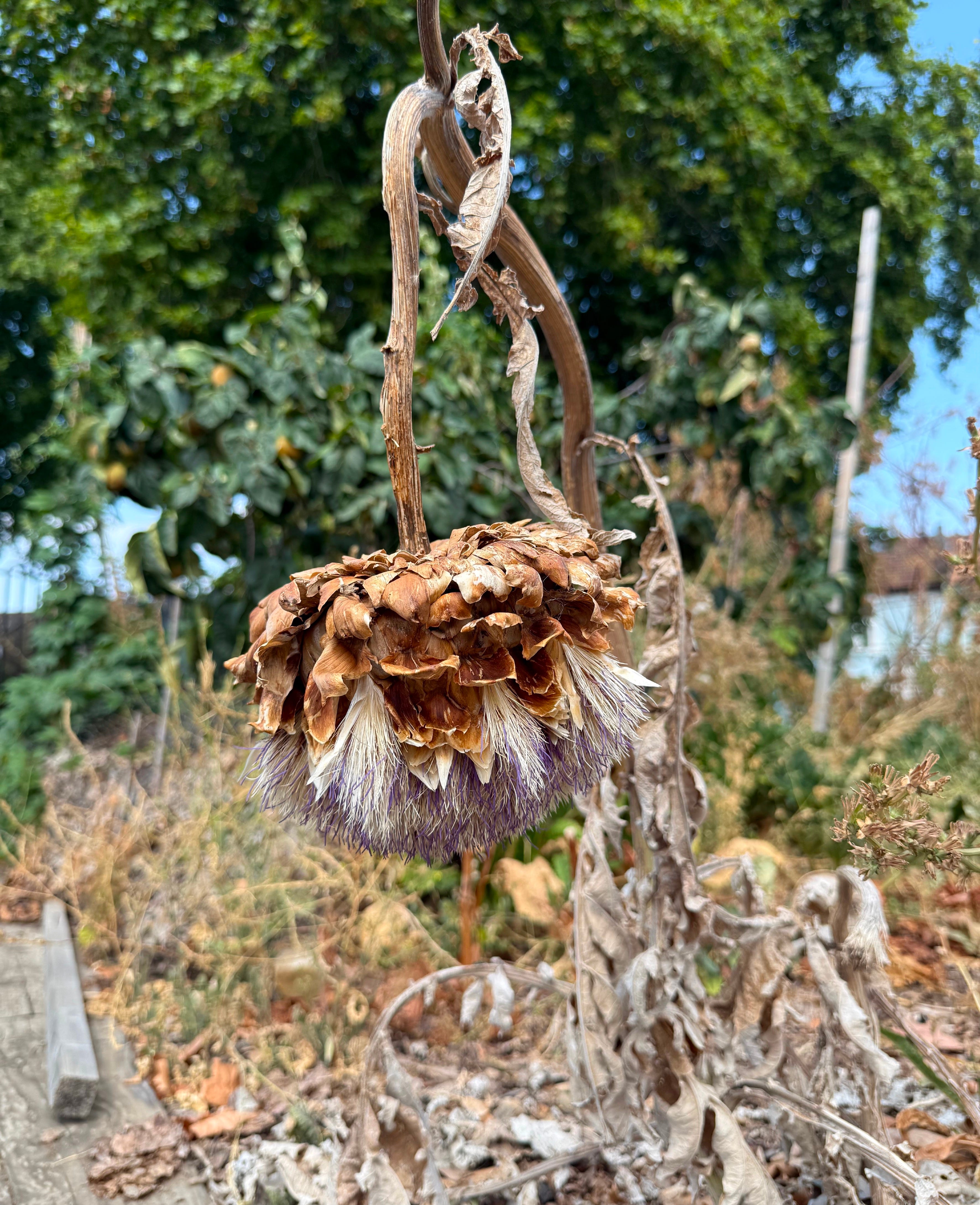

August

God of the idle heat, in this glaring road
you dominate all.
And over the green fields wilted down
under your blaze, these
thirsty unruly plants grow a jungle domesticity
to protect their fruit.
Of all hidden things, I sing, waiting
for evening’s grace.

- Robert Duncan

A Solemn Kind of Quiet
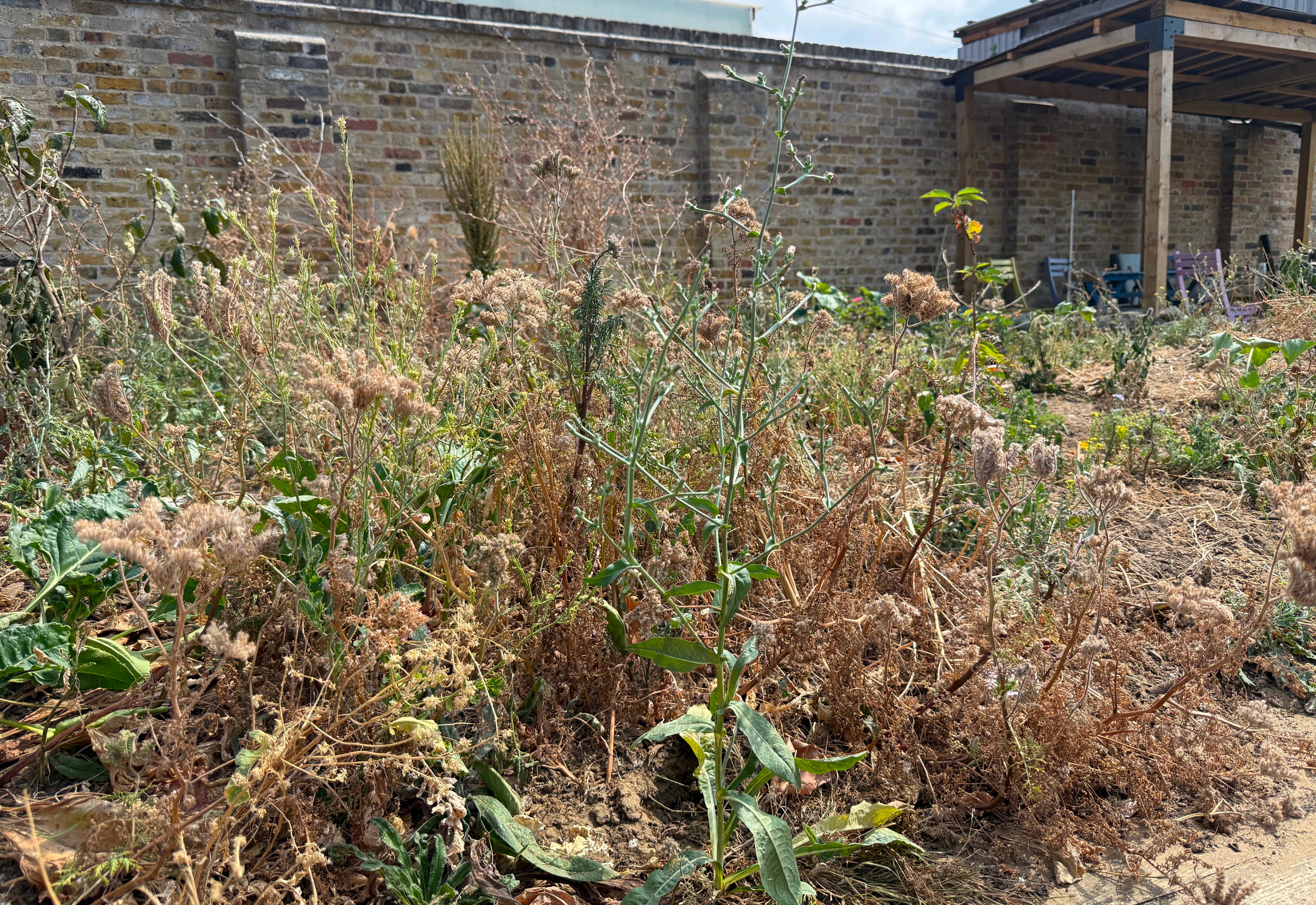
As many residents take off on their holidays elsewhere, the garden grew quieter as the harvests started to ripen and be ready to take home. The intense heat continued, making visitors to the garden fewer, and more transient. The sound of grass-loving insects trilling and buzzing filled the all-enveloping warm air. Grassy fronds (once green but now tinder), twigs and crisped leaves crunch underfoot, and the dry dirt crackled and shifted like powder where trodden.
Thames Water issued the long-expected London-wide hosepipe ban. And, as a non-commercial growing space, we were offered no exception to the rules. Limited slow-drip soaker hoses and watering cans it was, then.


The zinnias and tobacco plants parading the front railing planters were just about hanging on until the second week of August - that widely reported 38°C Thursday - when even they finally succumbed to the constant direct heat.


The plums either ripened strangely or dried out, and were then hit by Plum Moth caterpillars. We seem to have lost most of our blackcurrants. With any luck they may return next year but we won’t know for sure just yet.
The carrots were small, and needed constant attention to get through it all.
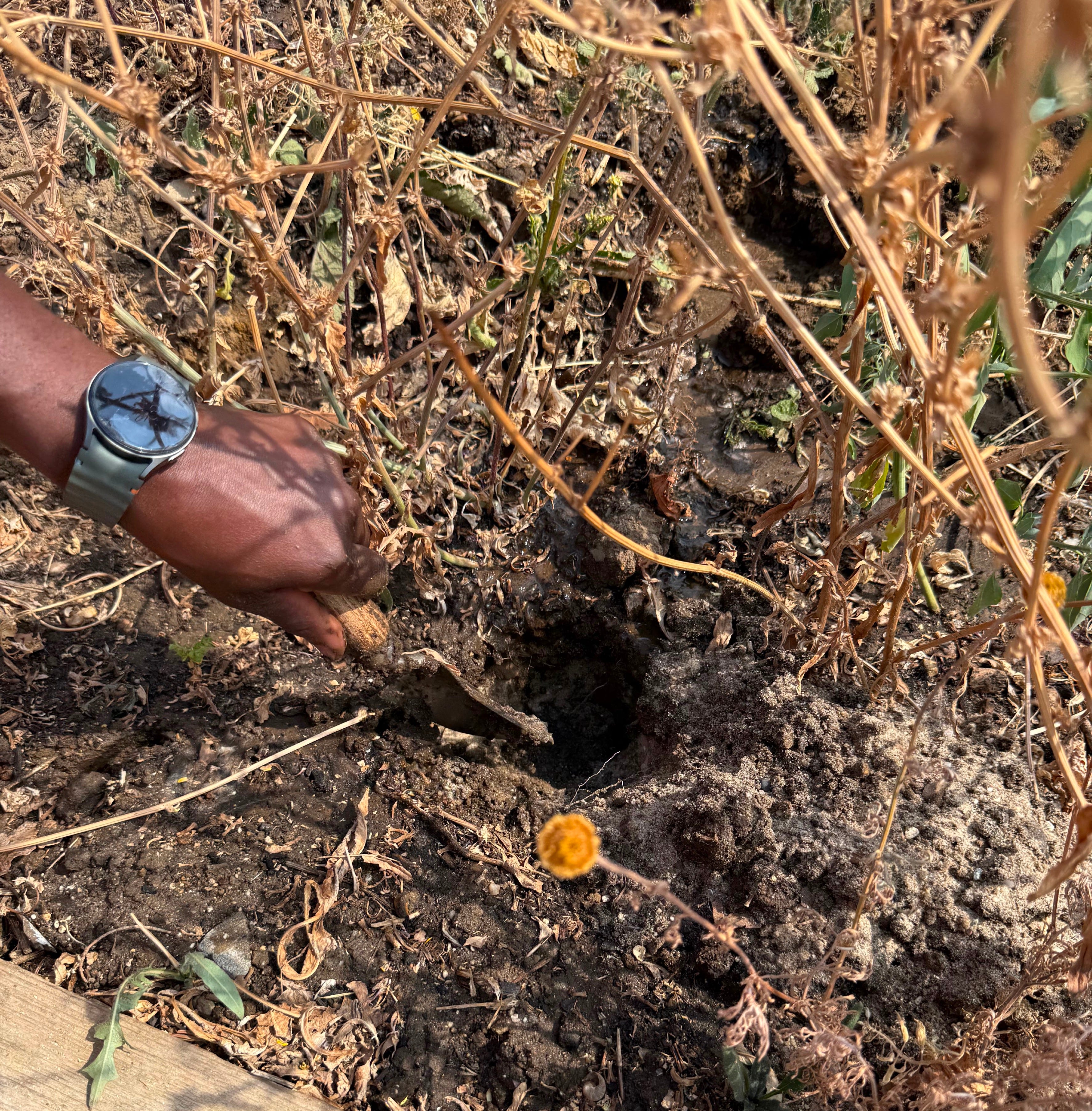
Most of the young plants and saplings in the Food Forest didn’t yet have the root structures to cope with the weather, so we dug deep vertical holes to get to them directly as much as we could. The nettles and comfrey puckered and dried, young verbenas the same.
The rogue courgette that landed in the Food Forest crisped up and waved a final temporary* goodbye. And our beloved willow whip tunnel took a huge hit.
* At time of writing, the courgette has revived and is hanging on - with new flowers! What a twist.

Hydrophobic soil
By early August in the most exposed areas of the community garden, we experienced hydrophobic soil. Soil becomes hydrophobic - water repelling - when extreme dryness kills helpful microbes usually present in a well-balanced earth. Without a healthy abundance of microbes to break it down, decomposing organic matter leaves a waterproof, waxy coating on soil particles. Water then beads up and runs off the surface of the dirt instead of soaking in.


The Food Forest was worst hit, having only been created a couple of months prior to summer. The area had not yet had chance to naturally strengthen its own microbial and fungal network needed to retain adequate moisture. We found that water skimmed off the surface of the dirt, unable to penetrate any deeper than ~5cm without constant manual intervention in the form of creating wells around planets, or digging deep holes.
In these situations, we decided to dig deep targeted tunnels to access the roots and avoid heavy evaporation. Yet even in doing this, the soil structure had been so affected that sometimes nothing could soak past the sides of the hole, creating a cast where water simply pooled, dirt particles floating on the surface like flour.
It was the same everywhere across the UK this summer, and it’s more than likely that we will experience it all again.
As gardeners, we’re used to trial and error, and watching the weather - so, what have we understood from these past 3-6 months?
Intense heat and prolonged drought will come again. We must expect it.
Similarly, warmer and wetter winters will come…
…therefore we should expand our rainwater capture capacity as much as possible.
Watering systems and irrigation networks will need deep, not surface, positioning.
Young plants will need more UV protection during unseasonably high UV.
We may need to focus on growing more perennials than annuals.
A mixed bag with some clear successes, but overall it’s been a very difficult summer season for most of us. The landscape is shifting, so we ought to adapt our approaches to gardening as best possible in time for next year’s endeavours, and beyond.

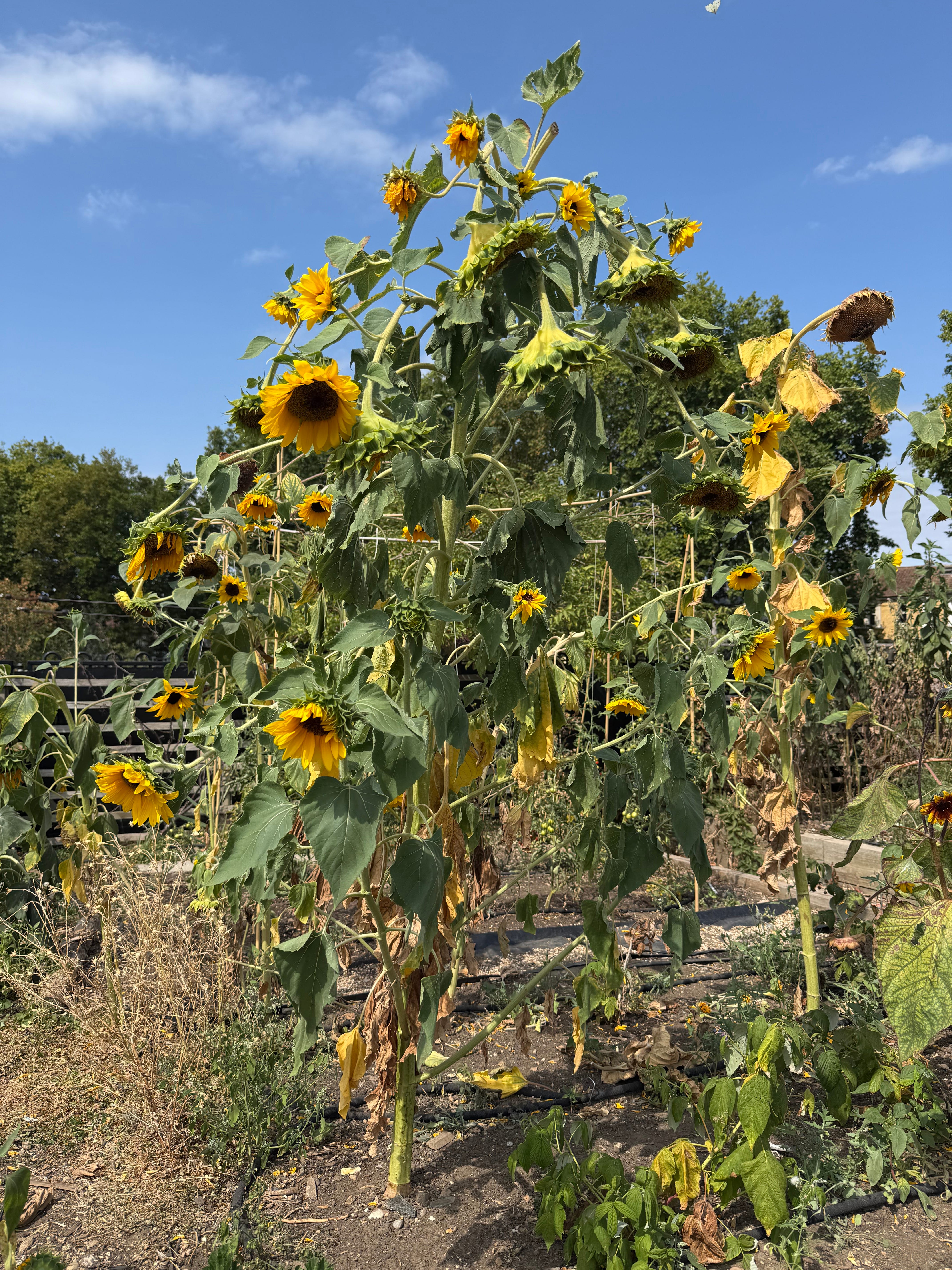
But it wasn’t all doom and gloom!
In the polytunnel, the tomatoes were still doing exceptionally well and our yield was remarkably plentiful, despite some of the toms splitting due to irregular moisture levels. One of our volunteers created a brilliant recipe from sundried split tomatoes and dried bay leaves! (We’ll be sure to share that recipe with you too).
The chilis were having a blast as well.


Our courgettes - in general - had been pumping out fruits pretty consistently, and what weren’t taken home in time as courgettes became mini-marrows (and were excellent for pickling!).
The chard didn’t seem to care about the drought either way, and was reliable as ever. The beans persisted, and the sweet potatoes carried on just fine. The sage acted as if nothing had happened. The hops carried on happily clambering skywards, looking the best they’ve ever been.
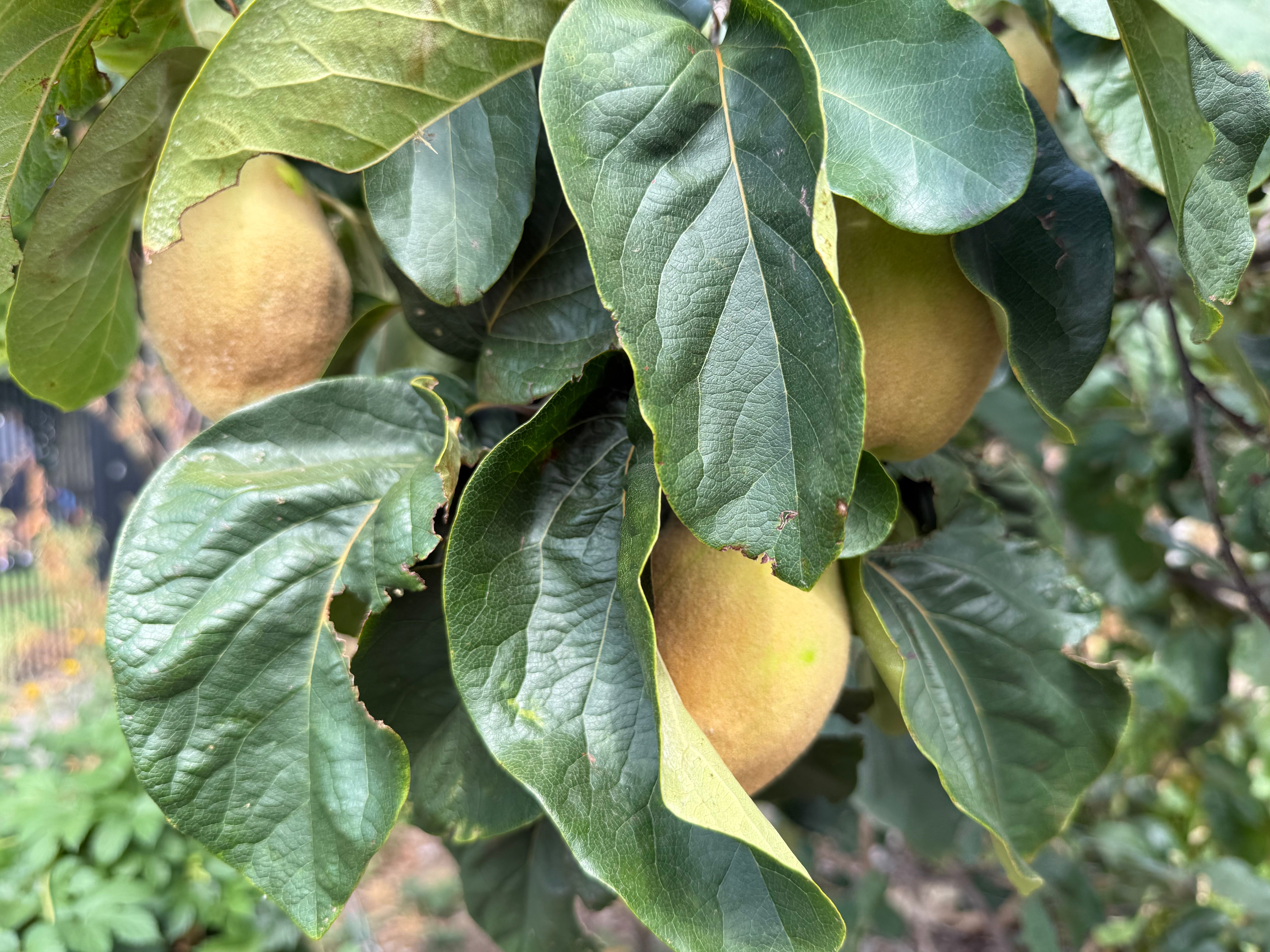
And the jewels in the August garden’s crown were the quinces - round and plump and fuzzy and plentiful. An absolute delight to see!

So there it was. August, a trial by any definition of the word. May September greet us with gentler arms, and refill all our reserves - tanks and souls - with some good old British rain once again.
